SMART Series
FAI Compliant

TT43 SMART

Championship-Ready Performance

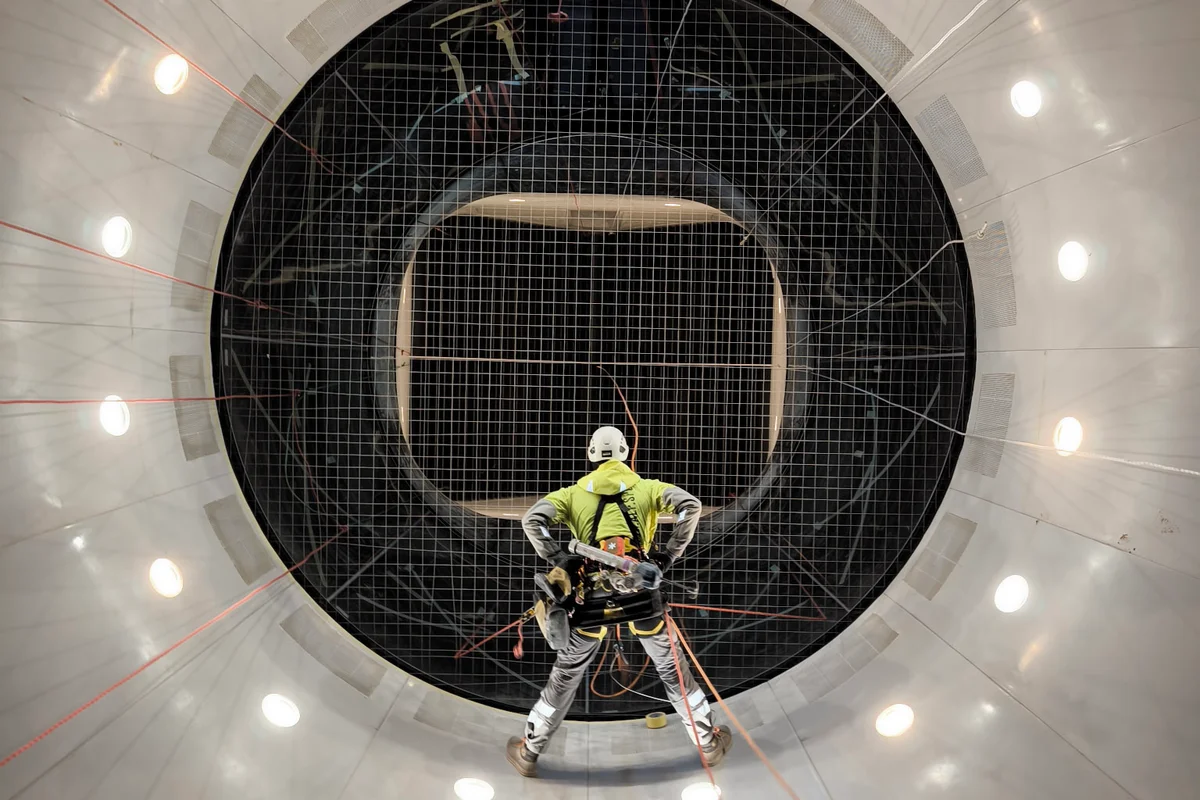
The flagship SMART series model, designed for professional training centers and competition venues. Features both single and double-loop configurations.

Chamber Diameter
4.3 m (14')
Max Speed
280 km/h
Power
1,260 kW
Noise Level
60 dBA
TT43 SMART

Key Features

4.3m FAI-compliant flight chamber
Up to 280 km/h with Beast power
Single and double-loop options
Integrated active cooling via aerodynamic turning vanes
14.51 sq.m. flight area
Professional competition features

Technical Specifications

General
Chamber Diameter4.3 m (14')
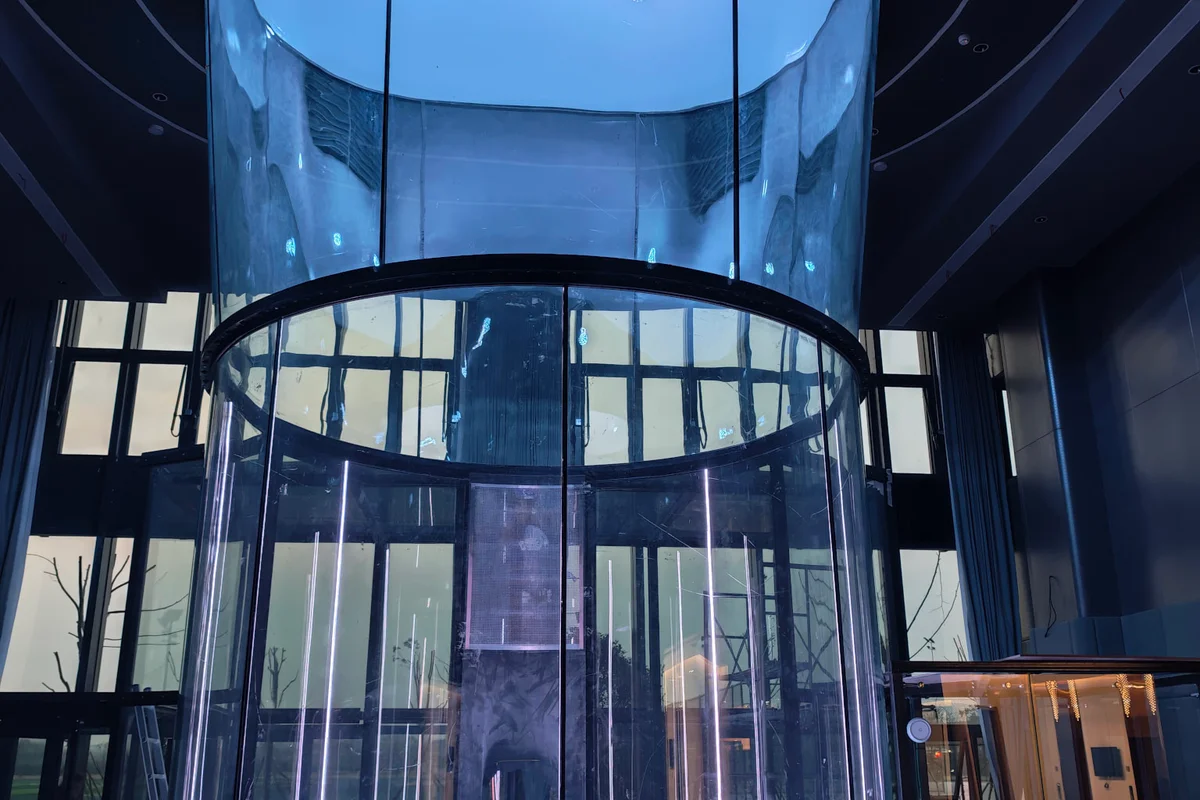
Glass Height (Default)4.2 m (13'8")
Glass Height (Maximum)10 m (32'8")
Chamber Area14.51 sq.m.
Diffusion Rate1.9

Ideal Applications

World Championships

Engineer FAI-compliant facilities capable of hosting professional indoor skydiving competitions and leagues.

Professional Training

Provide precision airflow and turbulence-free conditions for elite skydiver progression and technical coaching.

Military Training

Facilitate safe, cost-effective, and realistic freefall simulation for paratroopers and defense personnel.

Sports Complexes

A state-of-the-art anchor attraction designed to elevate modern sports complexes and recreation facilities.

Ready to Start Your Project?

Collaborate with our Stuttgart-based engineering team to configure the ideal high-performance wind tunnel solution for your specific goals.

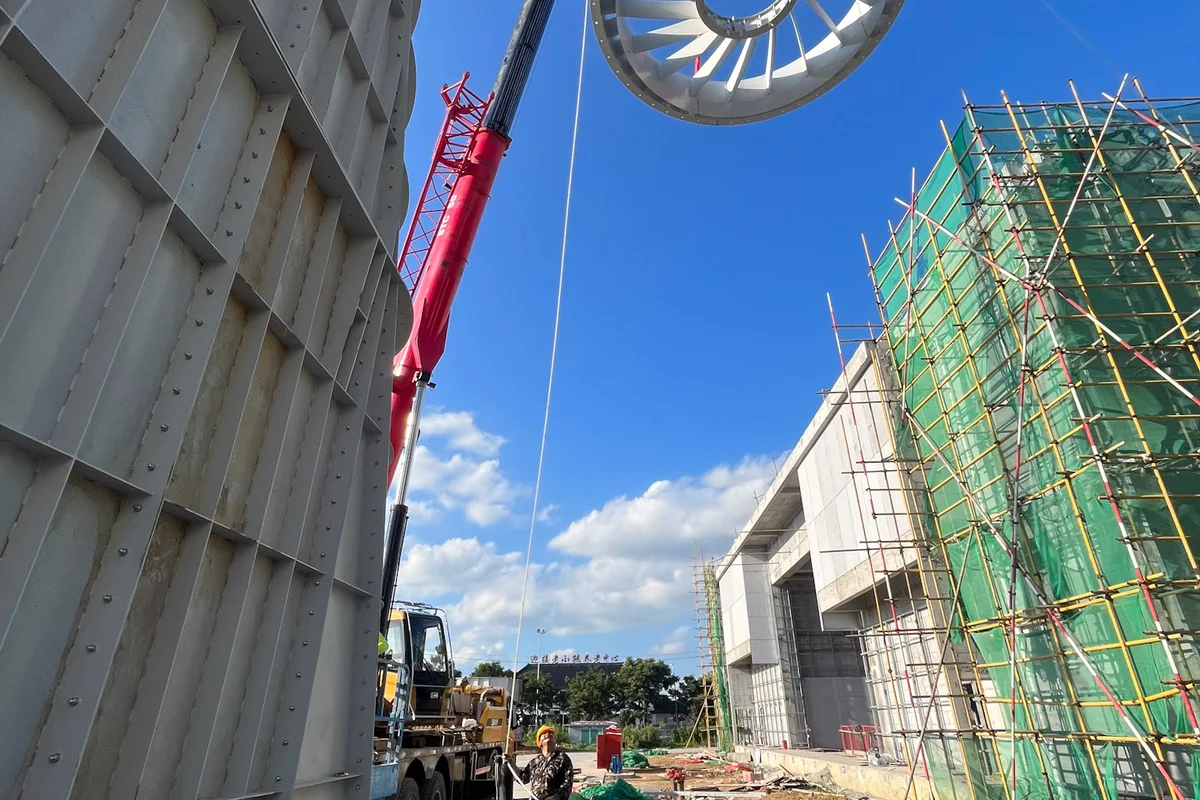
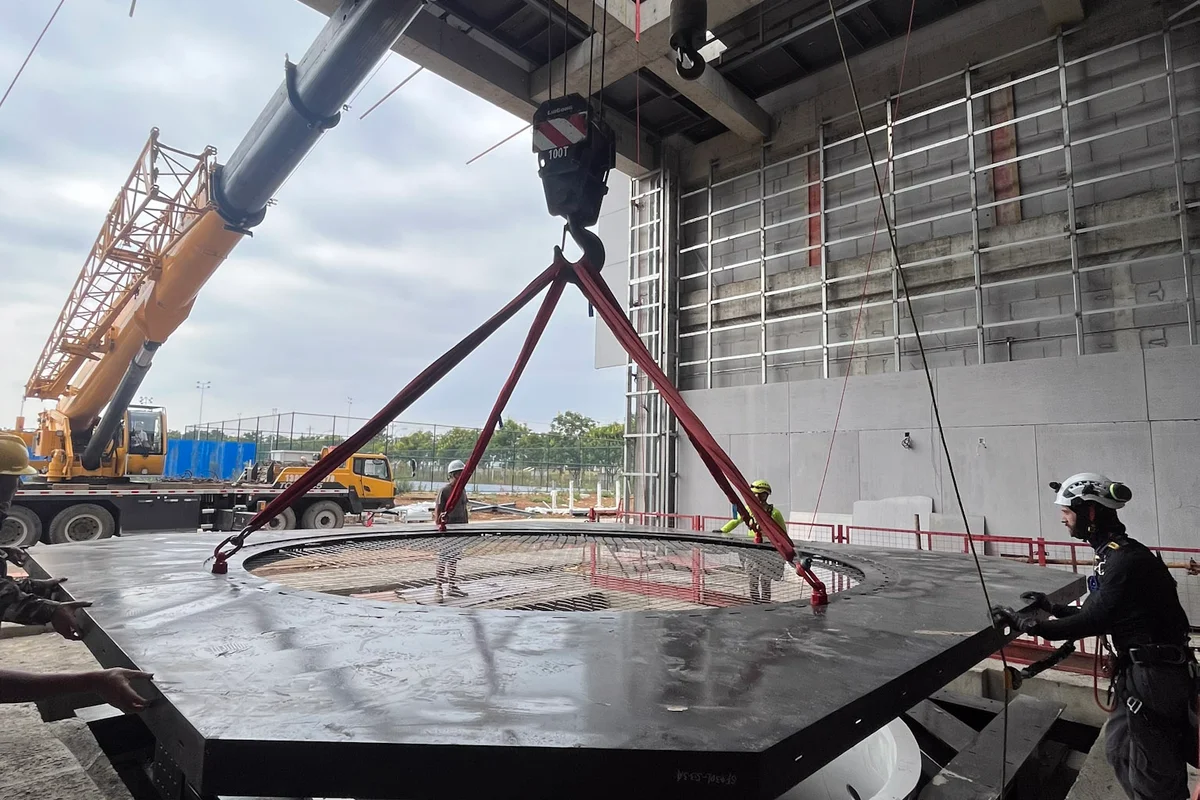
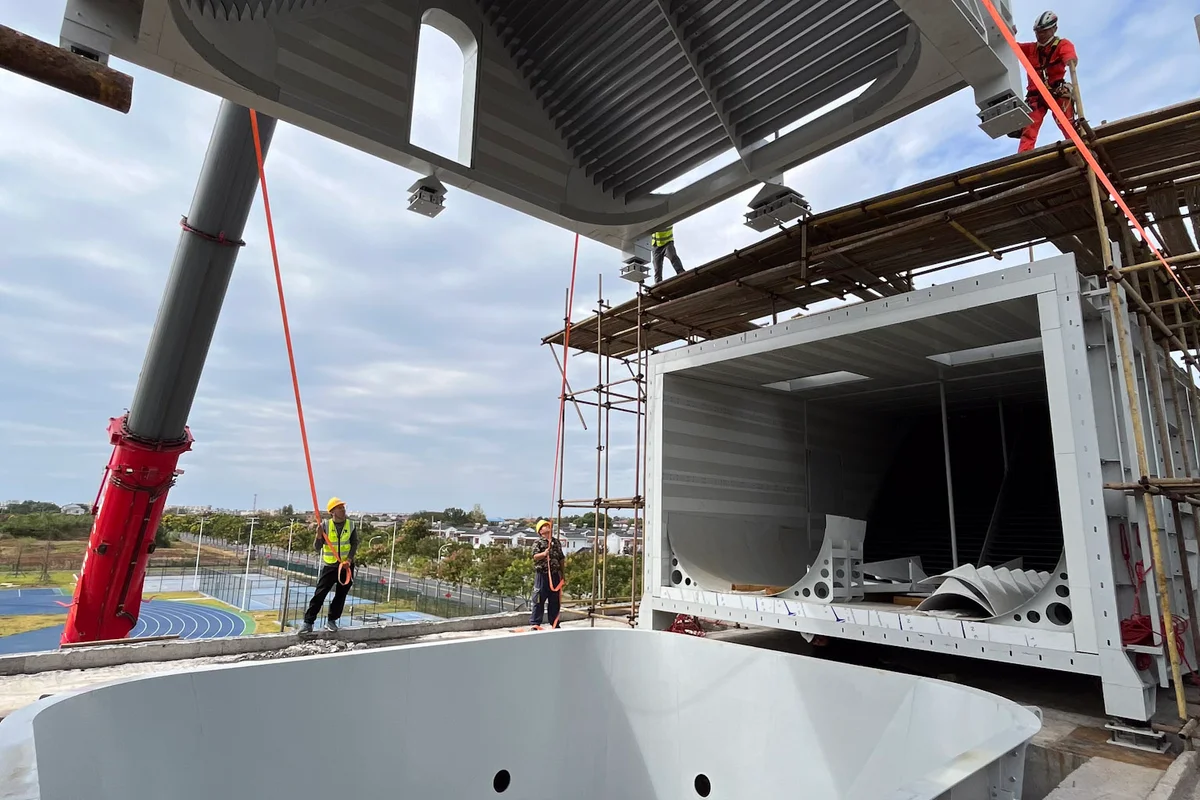
A heavy-duty crane lifts a circular stator vane ring into position during the installation of a TT43 Smart wind tunnel at the Flight Town project in China. This component is part of the axial fan assembly and features stationary vanes designed to straighten airflow within the loop. To the left, a large prefabricated steel duct section stands ready for integration into the wind tunnel structure.A heavy-duty crane lifts a circular stator vane ring into position during the installation of a TT43 Smart wind tunnel at the Flight Town project in China. This component is part of the axial fan assembly and features stationary vanes designed to straighten airflow within the loop. To the left, a large prefabricated steel duct section stands ready for integration into the wind tunnel structure.

Crane lifting stator vane assembly for TT43 Smart installation in China

A heavy-duty crane lifts a circular stator vane ring into position during the installation of a TT43 Smart wind tunnel at the Flight Town project in China. This component is part of the axial fan assembly and features stationary vanes designed to straighten airflow within the loop. To the left, a large prefabricated steel duct section stands ready for integration into the wind tunnel structure.

2 / 27
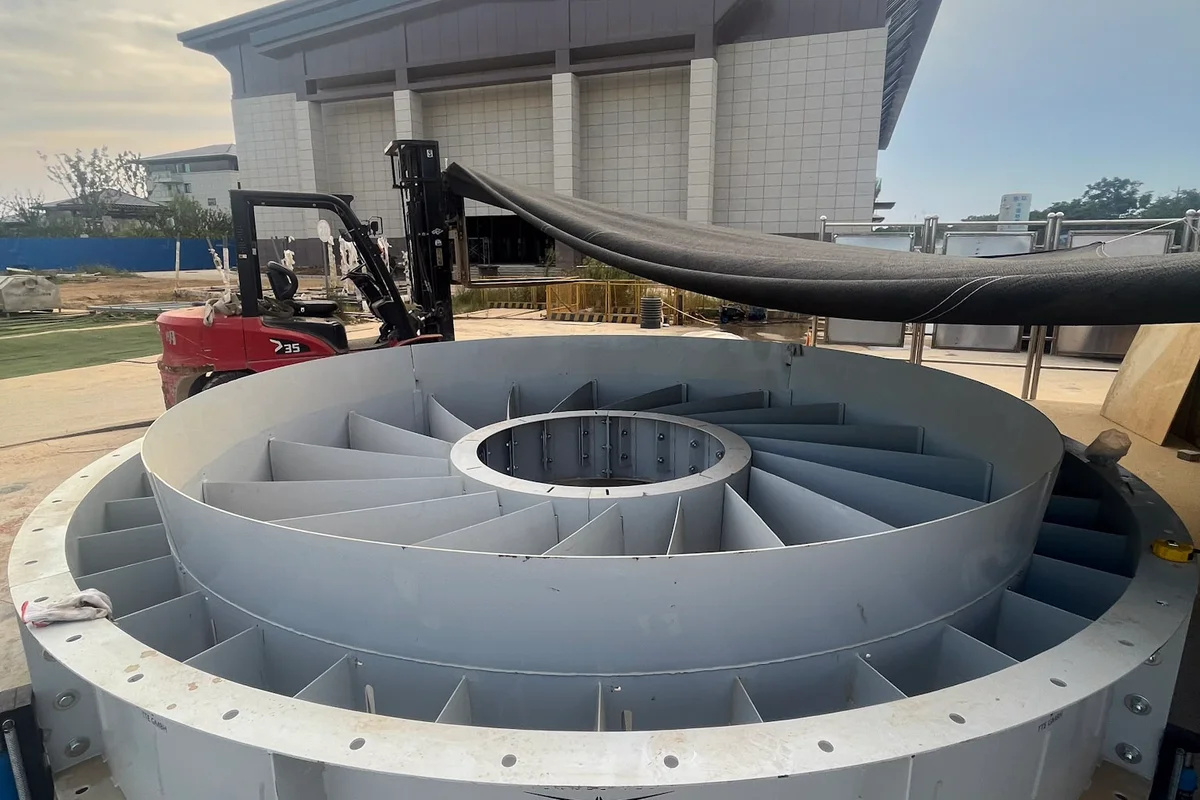
A large circular stator vane assembly sits on the ground during the installation of a TT43 Smart wind tunnel at China Flight Town. The component features fixed radial guide vanes arranged between an inner hub and outer casing, designed to manage airflow within the axial fan section. The TTE GMBH logo is visible on the exterior of the steel housing. Construction equipment, including a forklift and power tools, surrounds the unit with the facility building in the background.
A heavy-duty crane lifts a circular stator vane ring into position during the installation of a TT43 Smart wind tunnel at the Flight Town project in China. This component is part of the axial fan assembly and features stationary vanes designed to straighten airflow within the loop. To the left, a large prefabricated steel duct section stands ready for integration into the wind tunnel structure.
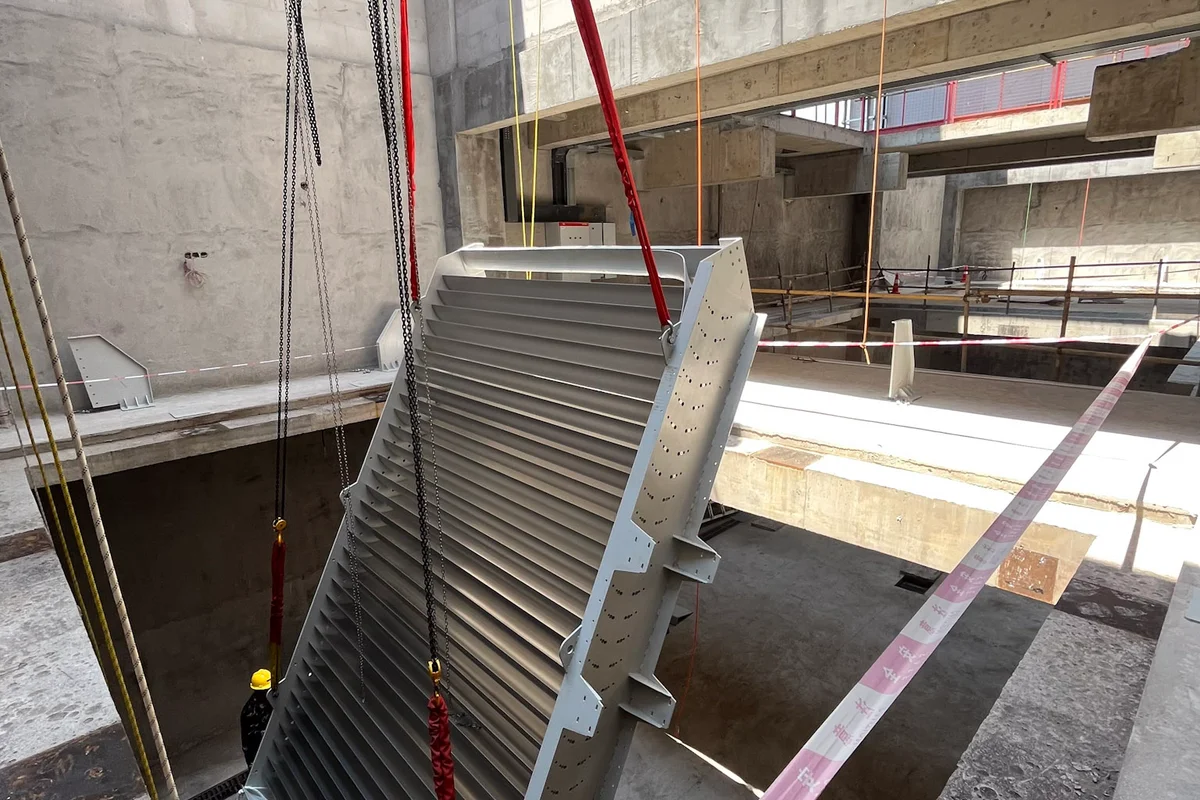
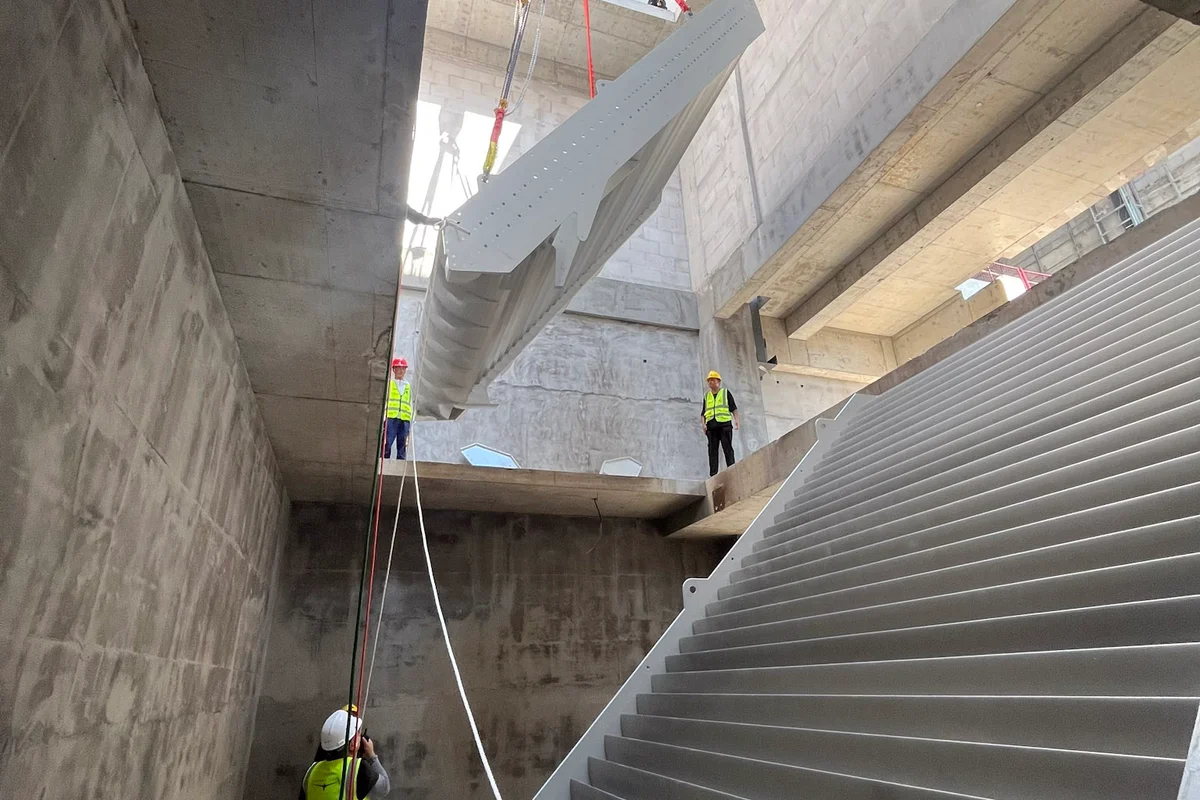
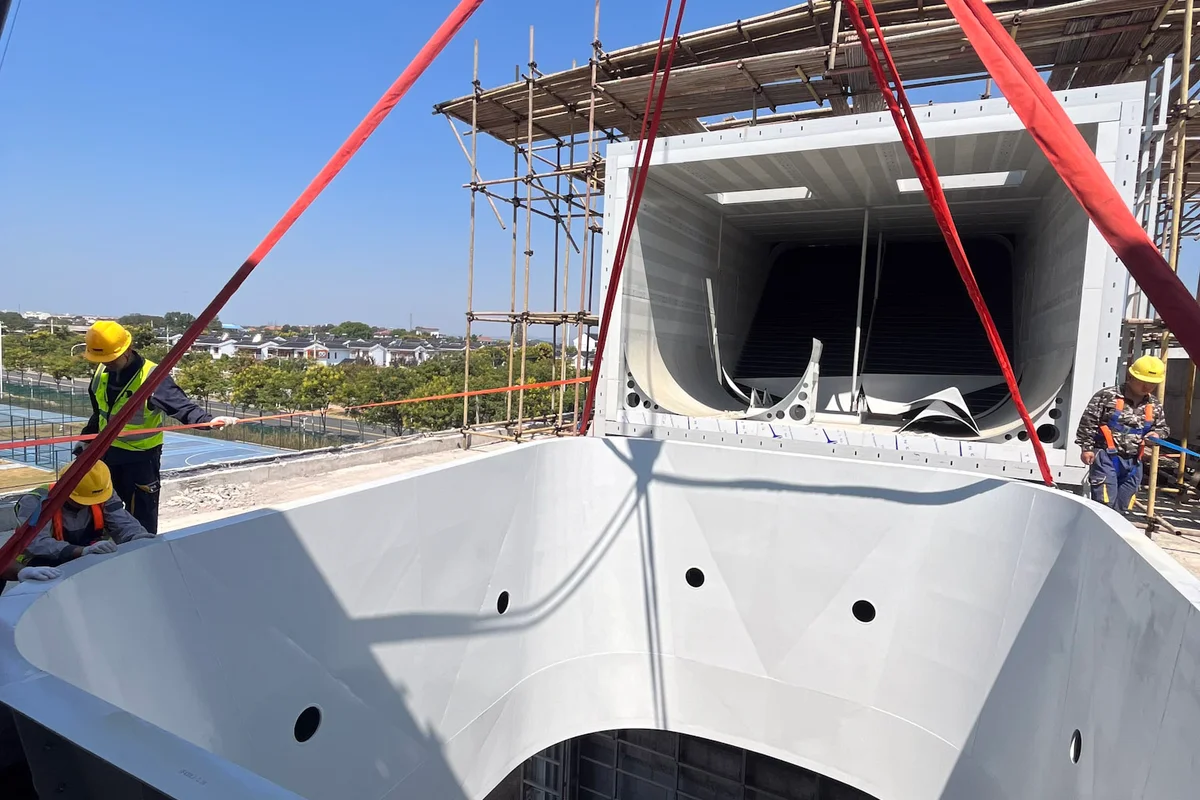
Installation of a turning vane assembly with integrated active cooling at the China Flight Town project. This component belongs to a TT43 Smart wind tunnel and combines airflow redirection with thermal management capabilities. The aluminum vanes contain internal coolant channels to dissipate heat generated during operation. The assembly is suspended by crane rigging within the concrete facility structure, ready for placement in the return duct corner.
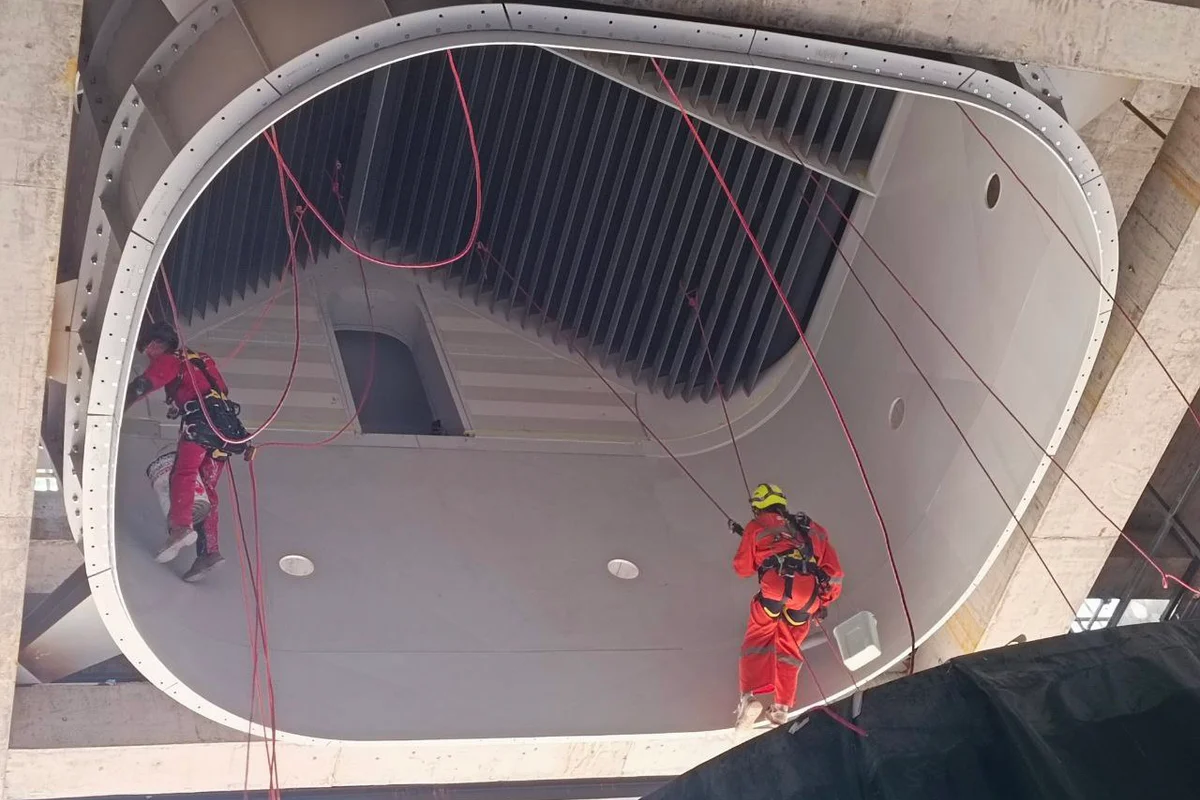
Technicians guide the installation of active cooling turning vanes into the concrete duct structure of the TT43 Smart wind tunnel at China Flight Town. A crane lowers the aluminum vane segment through an upper opening into the return loop. These turning vanes incorporate internal coolant channels to function as heat exchangers, managing air temperature while redirecting airflow 90 degrees with minimal turbulence and pressure loss.
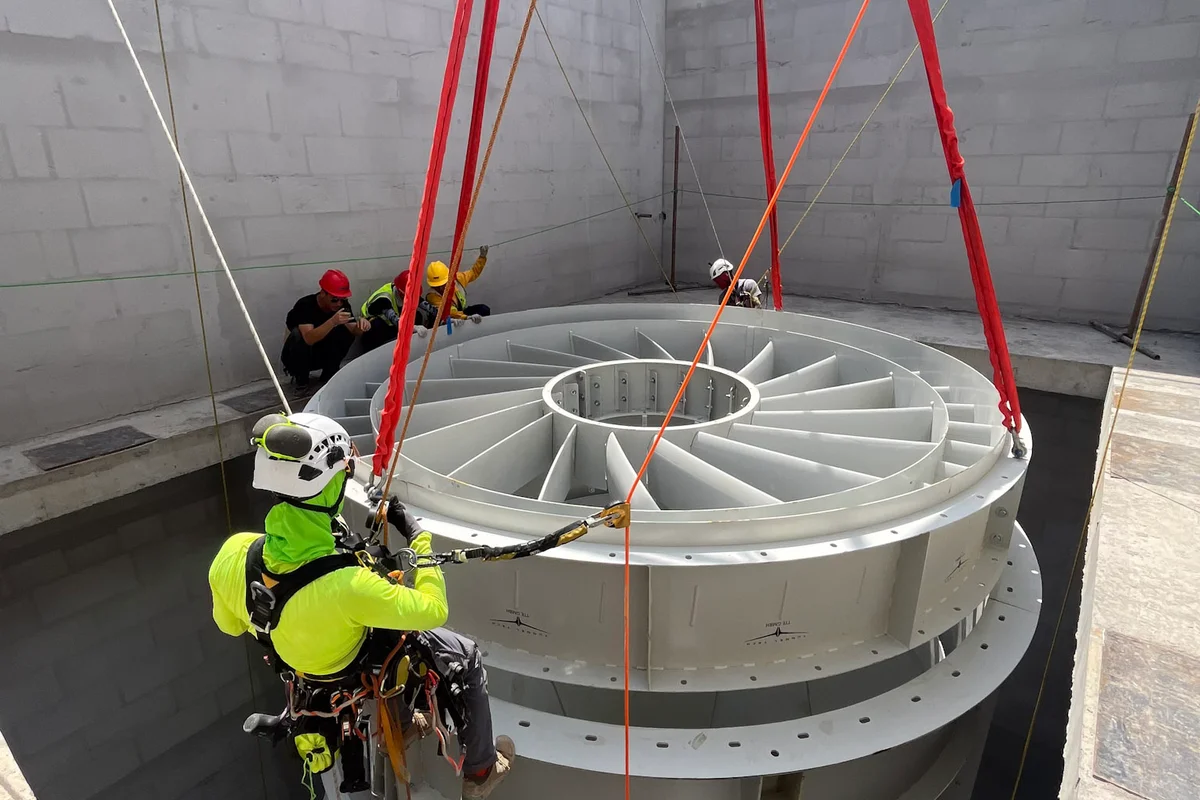
A rope access technician guides the installation of the axial fan stator vane assembly into the concrete housing. This heavy lift operation is part of the construction of a TunnelTech TT43 Smart wind tunnel at the China Flight Town project. The steel section contains the stationary stator vanes required to straighten airflow within the vertical return duct. The component is suspended by red lifting straps as it descends into the facility's concrete structure.
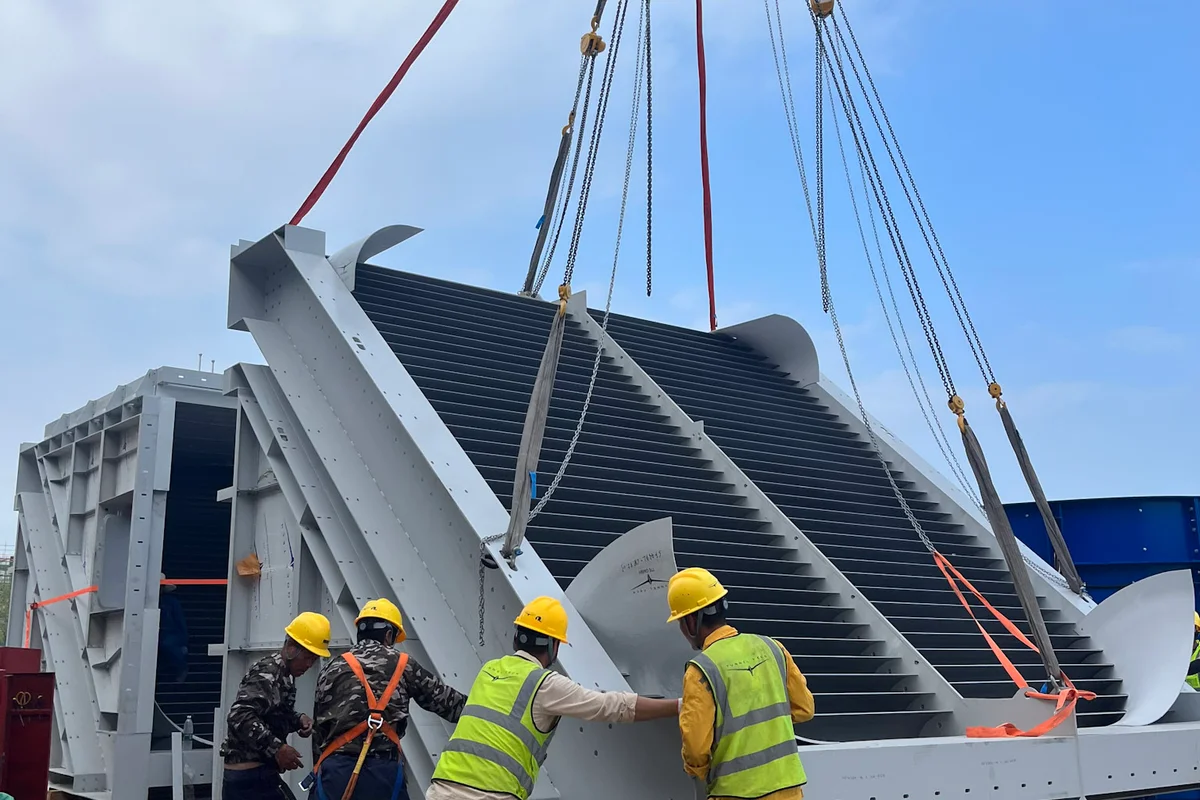
A crane lifts a section of turning vanes during the installation of a TT43 Smart wind tunnel at the China Flight Town project. Construction personnel guide the steel-framed unit, which contains integrated coolant channels for the facility's active cooling system. These vanes function as heat exchangers to regulate airflow temperature while redirecting air through the corner of the recirculating duct loop.
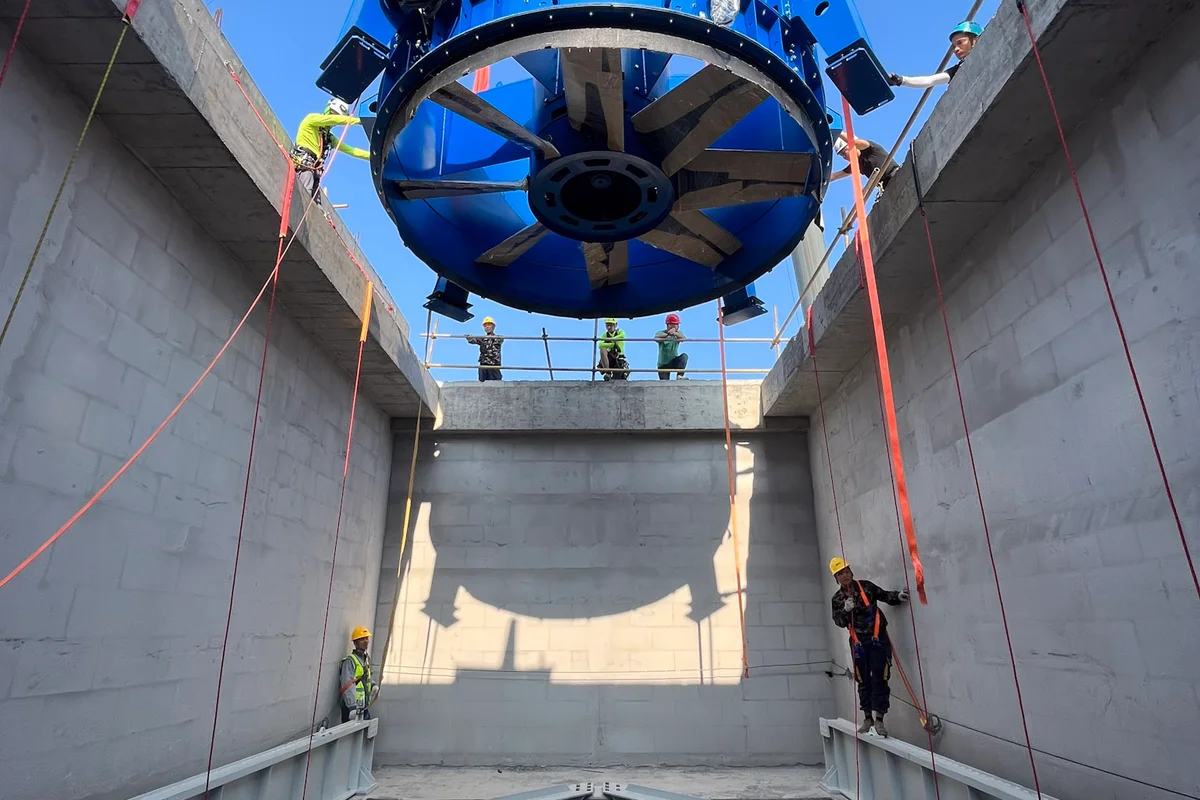
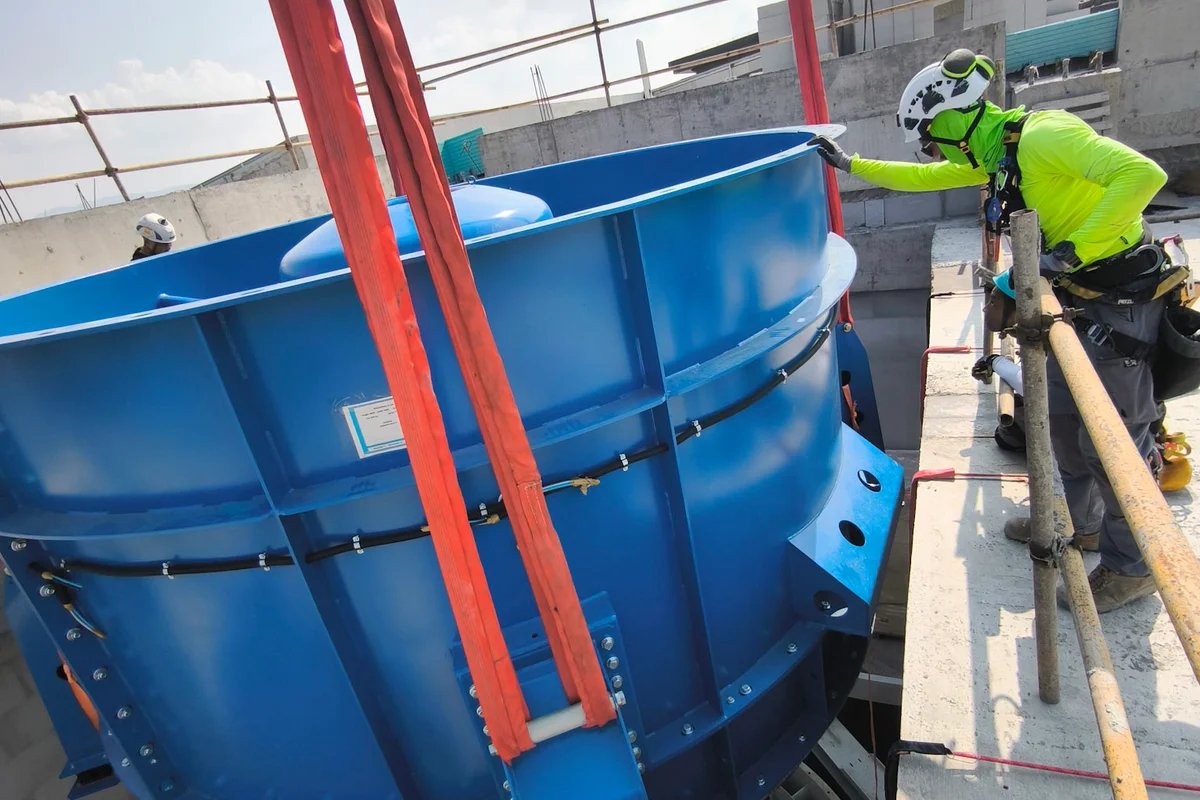
A heavy-duty crane lowers a blue EVG axial fan unit into the vertical concrete return air duct of a TT43 Smart wind tunnel at the China Flight Town facility. The fan assembly, featuring carbon-fiber blades, descends toward a stationary guide vane structure positioned at the base of the shaft. Installation technicians guide the load using rope access techniques to ensure precise alignment within the concrete housing. This installation step places the primary airflow generation components within the return loop structure.
Construction workers guide the installation of a high-power axial fan unit for a TunnelTech TT43 Smart wind tunnel at the China Flight Town project. The blue steel fan housing, suspended by heavy-duty crane straps, descends into the vertical concrete shaft of the return duct. Visible below the housing is the fan impeller featuring carbon-fiber blades, designed for efficient operation within the recirculating airflow loop.